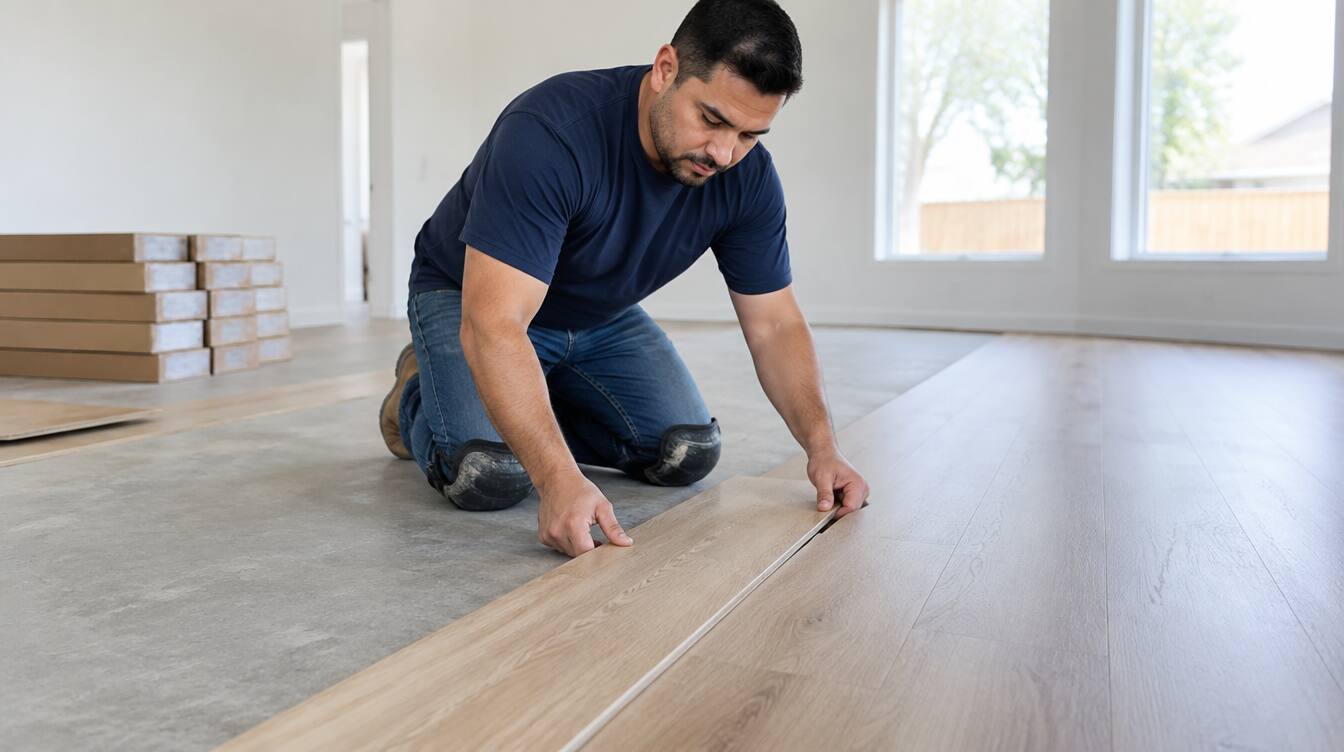
Nobody searches for a flooring installer for fun. They search because they just bought a house in Cibolo with tired carpet, or a dishwasher leak ruined the kitchen floor, or they've finally decided to rip out the 1990s tile. They type "LVP installation near me" or "tile installer San Antonio," look at the map, and start calling.
Flooring has a few quirks that roofing and plumbing don't. Some flooring companies have a showroom, many don't. Customers care a lot about how the finished floor looks. And the same job can be searched five different ways: LVP, vinyl plank, laminate, "wood-look tile," hardwood. Here's how to set up your Google presence so those searches lead to you.
1. Pick the category that matches what you actually are
Google's guidelines say to choose categories that finish the sentence "This business IS a ___," and to use as few as possible. For flooring, that choice matters more than people think:
- Flooring contractor fits a business that installs floors.
- Flooring store fits a business whose main job is selling flooring, usually from a showroom.
- Tile contractor may fit better if tile is most of your work.
If you mostly install, make "Flooring contractor" your primary category. If you run a real showroom and also install, you can use both. Don't add categories for things you don't do, and don't use categories as extra keywords. Google says not to.
2. Showroom or no showroom? Set it up the right way
This is where a lot of flooring companies trip up.
If you install only and work from home or a shop customers don't visit, you're a service-area business. Google's guidelines say to hide your address and list the areas you serve, like Alamo Heights, Converse, Live Oak or New Braunfels.
If you have a showroom that's staffed during your posted hours, you can show the address so people can visit, and also set a service area for installs.
What you shouldn't do is list a warehouse or mailbox address customers can't actually visit. Google's guidelines don't allow it, and it puts your listing at risk.
3. Name every material and service you install
Homeowners don't all use the same words. One person searches "vinyl plank," another searches "LVP," another searches "waterproof flooring." Google matches searches against what's on your profile and website, so spell out what you do.
In the Services section of your profile, list each one separately: luxury vinyl plank, tile, hardwood, engineered hardwood, laminate, carpet removal, subfloor repair, stair installation, baseboards. Then write a short description for each in plain language. This takes 20 minutes and is one of the easiest wins in this whole guide.
4. Let your photos do the selling
Flooring is a visual decision. Before a homeowner trusts you with their living room, they want to see living rooms you've already done.
Google encourages businesses to add photos and videos, and for a flooring installer that's your best salesperson. After every job, take three photos:
- A wide shot of the finished room in good light.
- A close-up that shows clean seams, transitions and edges.
- A before shot, if you remembered to take one.
Post them with one honest sentence, like "Wood-look LVP throughout a Helotes home, replacing old carpet and tile." That tells homeowners and Google what you did and where.
5. Get reviews that describe the job
Reviews are part of how Google judges prominence, and they're what homeowners read before calling. A review that says "They installed tile in our master bath in Schertz, finished in two days and left the house spotless" is worth far more to a future customer than "Great job!"
You can't tell customers what to write, and you shouldn't. But when you ask, remind them which job it was: "Thanks again for letting us do your kitchen tile. If you have a minute, a quick Google review would really help us." People tend to mention what you remind them of. Ask after every job, reply to every review, and never pay for reviews.
6. Give each material its own page on your website
One page that says "We do all types of flooring" gives Google and homeowners very little to go on. A page for each main service works much better: LVP installation, tile installation, hardwood floors, and so on.
Then add pages for the main areas you serve. Write them for real people: what the job involves, how long it usually takes, what affects the price, and how to get a quote. Link to these pages from your Google profile where it makes sense.
7. Answer the question everyone asks: "How much?"
Almost every flooring customer wants a rough price before they call. Most flooring sites avoid the topic, which is exactly why answering it helps you stand out.
Write a page or article that explains what drives the cost in San Antonio: the material, the square footage, removing the old floor, leveling the subfloor, and stairs or tricky layouts. Give realistic ranges from your own jobs. Homeowners who read it show up to the estimate better informed and more ready to hire.
What to do this week
- Check your primary category and remove any that don't fit.
- Make sure your address setup matches how you really work (showroom or service area).
- List every material and service in the Services section.
- Upload photos from your last five jobs.
- Ask your last 10 happy customers for a review, mentioning the job you did.
Sources: Google Business Profile Help, "Tips to improve your local ranking on Google" and "Guidelines for representing your business on Google."